Surah Yunus: Meaning, Benefits, and Tajweed Rules Explained
Surah Yunus is the 10th chapter of the Holy Quran, named after Prophet Yunus (AS), also known as Jonah. This Surah was revealed in Makkah and consists of 109 verses (Ayat) across 11 rukus (sections). Surah Yunus is found in Juz’ 11 of the Quran.
The Surah centers on the story of Hazrat Yunus (AS) and the trials he faced, especially his time spent in the belly of the fish. The Surah teaches valuable lessons about patience, repentance, and the immense mercy of Allah. A core message is that it is never too late to turn to Allah in repentance, regardless of how desperate the situation might seem.
Key Facts About Surah Yunus:
| Attribute | Details |
|---|---|
| Number of Verses | 109 |
| Number of Rukus | 11 |
| Total Words | 2023 |
| Total Letters | 7497 |
| Location in Quran | Juz’ 11 |
Benefits of Reciting Surah Yunus
Reciting Surah Yunus brings spiritual relief and strength during difficult times. Here are some benefits:
1. Relief in Hardships:
Reciting Surah Yunus brings comfort and ease to those facing challenges. The Surah reminds us of Allah’s mercy and teaches patience, just as Prophet Yunus showed in his ordeal.
2. Easing of Hurdles:
Reciting this Surah regularly can lighten the burdens of the reciter and help overcome life’s obstacles with greater ease.
3. Increased Faith in Allah:
Surah Yunus reinforces faith in Allah’s mercy and reminds the believer that no matter the severity of a trial, Allah’s help and mercy are always available for those who turn to Him.
4. Protection Against Enemies:
Regular recitation of Surah Yunus provides protection from enemies and shields the reciter from harm, invoking Allah’s help.
Tajweed Rules for Surah Yunus
To recite Surah Yunus correctly, it’s essential to follow the tajweed rules for proper pronunciation. These rules ensure the words are recited as intended and with clarity:
1. Ikhfa (Hidden Pronunciation)
- Example: When the letter “ن” (noon) is followed by one of the 15 letters of Ikhfa, like “ب”, “ج”, etc., the sound is partially hidden.
- Color-Coded: Blue
2. Ghunna (Nasal Sound)
- Example: The letter “م” (meem) or “ن” (noon) with a shaddah (double mark) or when followed by specific letters.
- Color-Coded: Orange
3. Idghaam (Merging)
- Example: When the letter “ن” (noon) is followed by letters like “ي” or “و”, the sound merges smoothly into the next letter.
- Color-Coded: Green
4. Qalqala (Echoing Sound)
- Example: Letters such as “ق”, “ط”, “ب”, “ج”, and “د” produce an echoing sound when they appear with a sukoon (no vowel).
- Color-Coded: Red
5. Qalb (Heart Transformation)
- Example: The letter “و” (waw) when following “م” (meem) under certain conditions.
- Color-Coded: Purple
6. Idghaam Meem Saakin (Merging of Meem Saakin)
- Example: When the letter “م” (meem) is followed by another “م” (meem), the two sounds merge.
- Color-Coded: Light Green
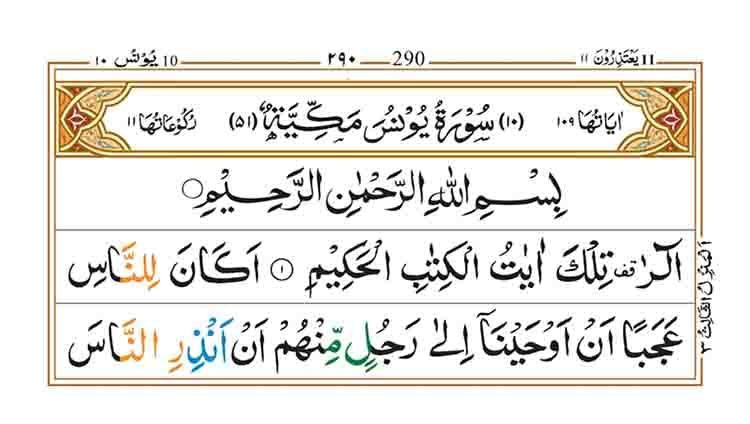
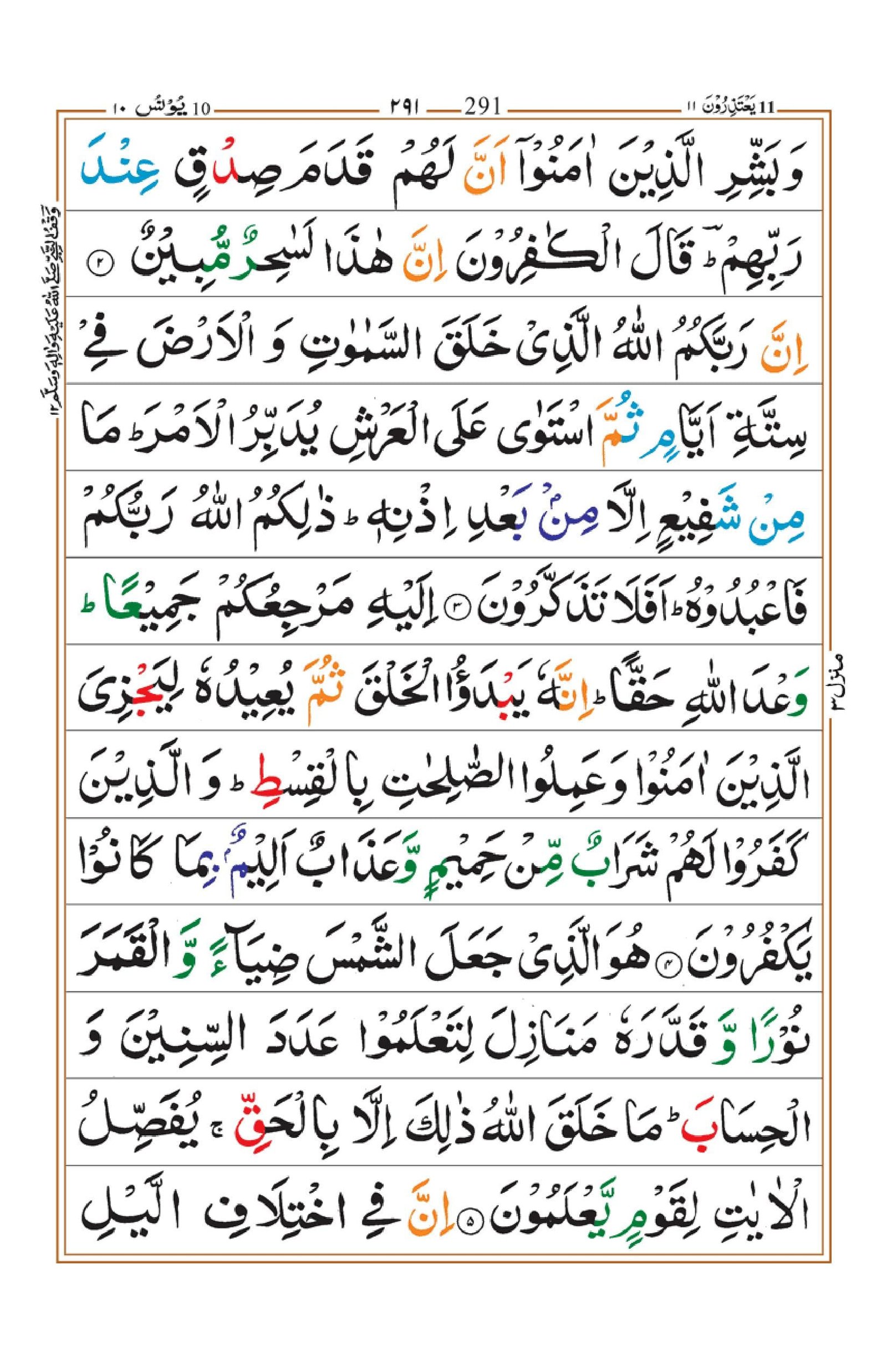
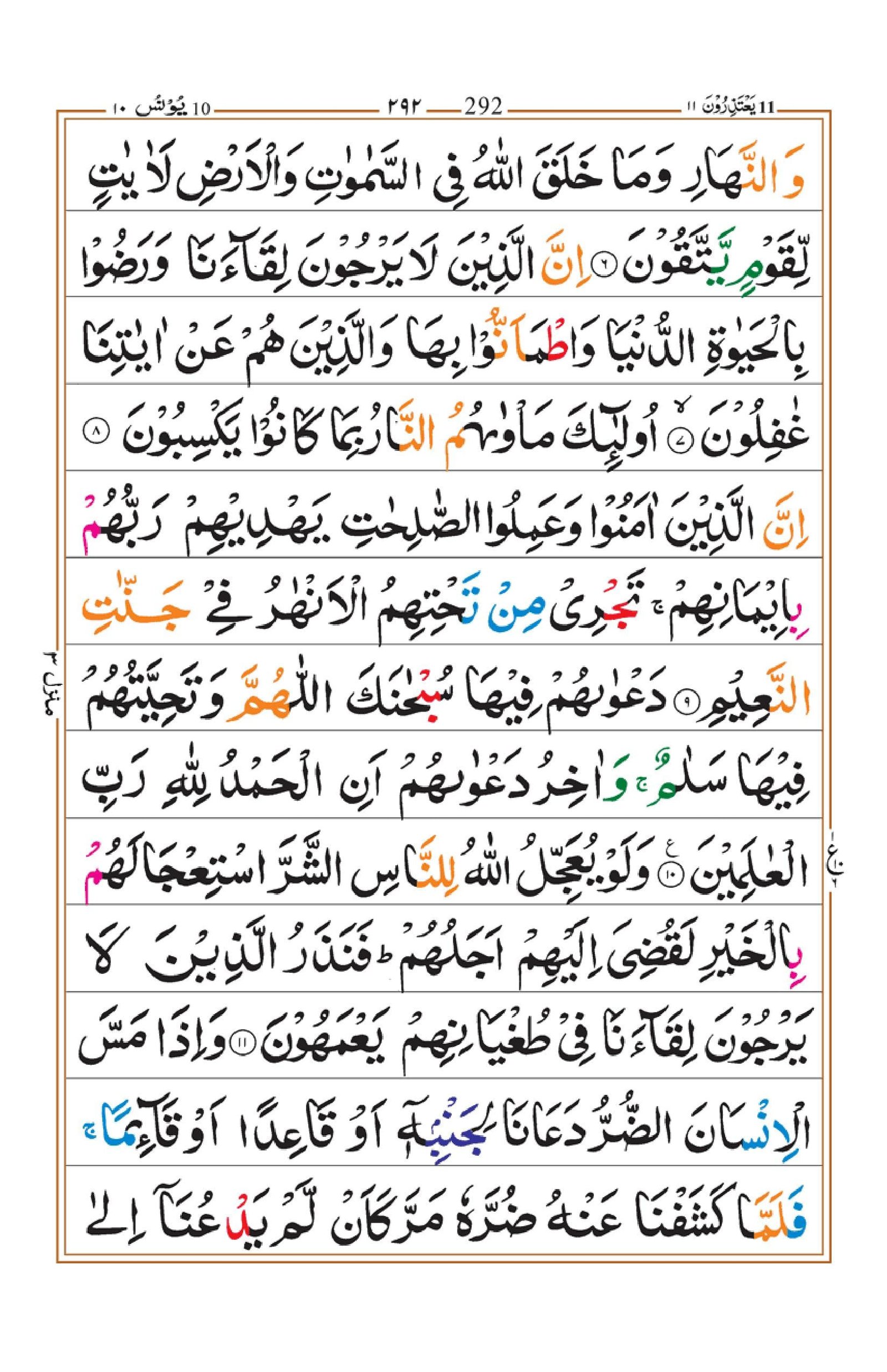
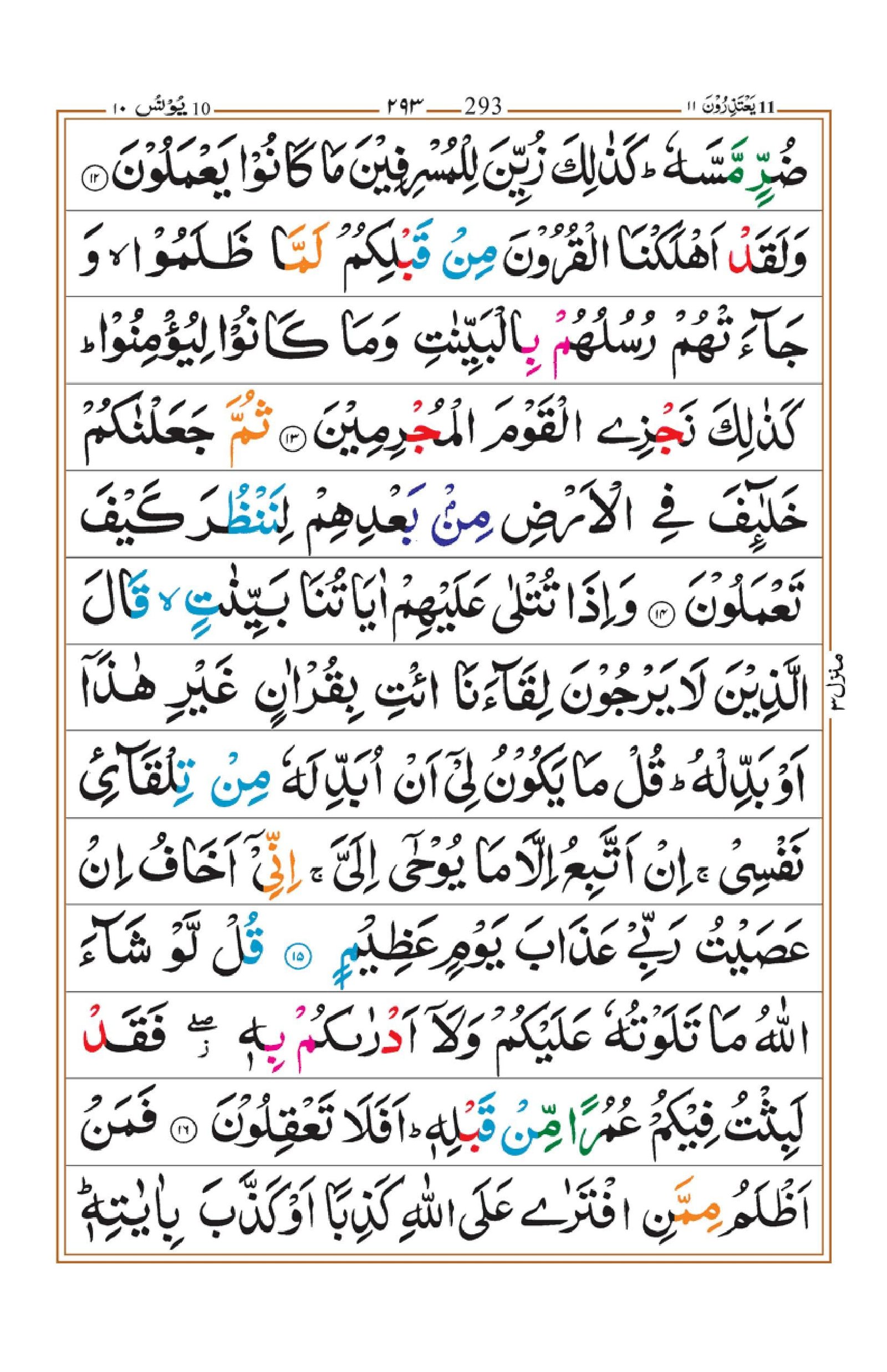
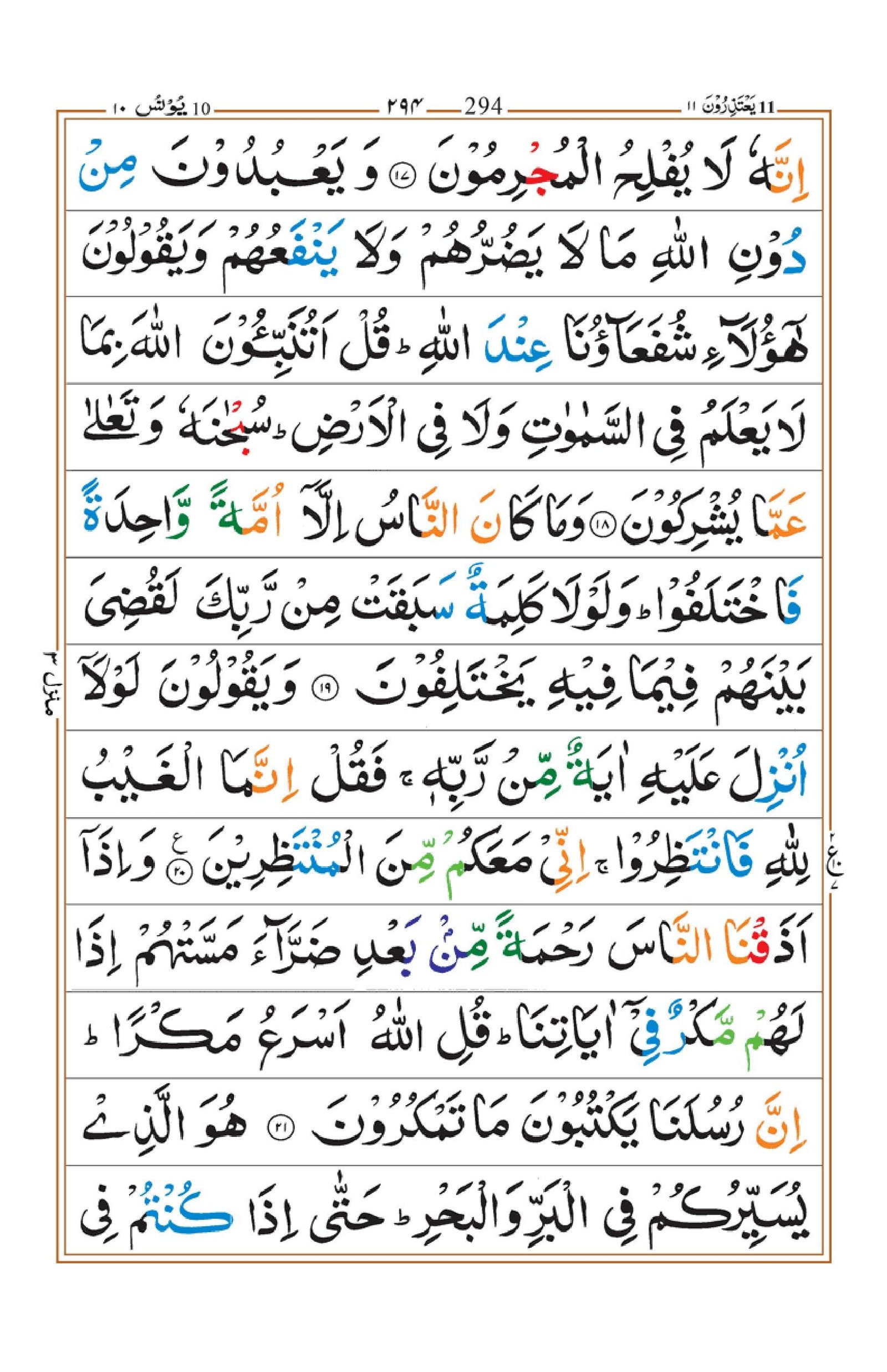
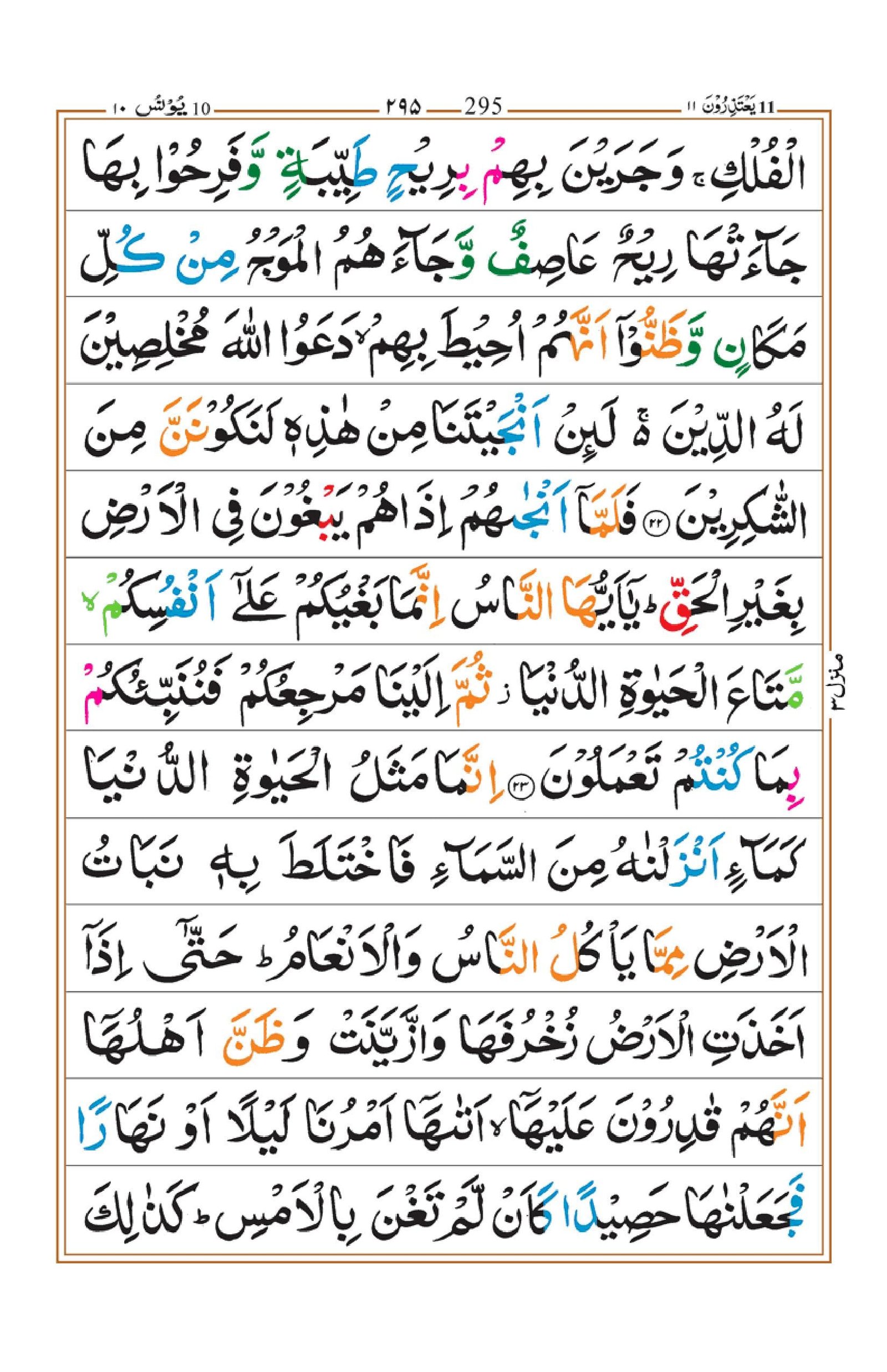
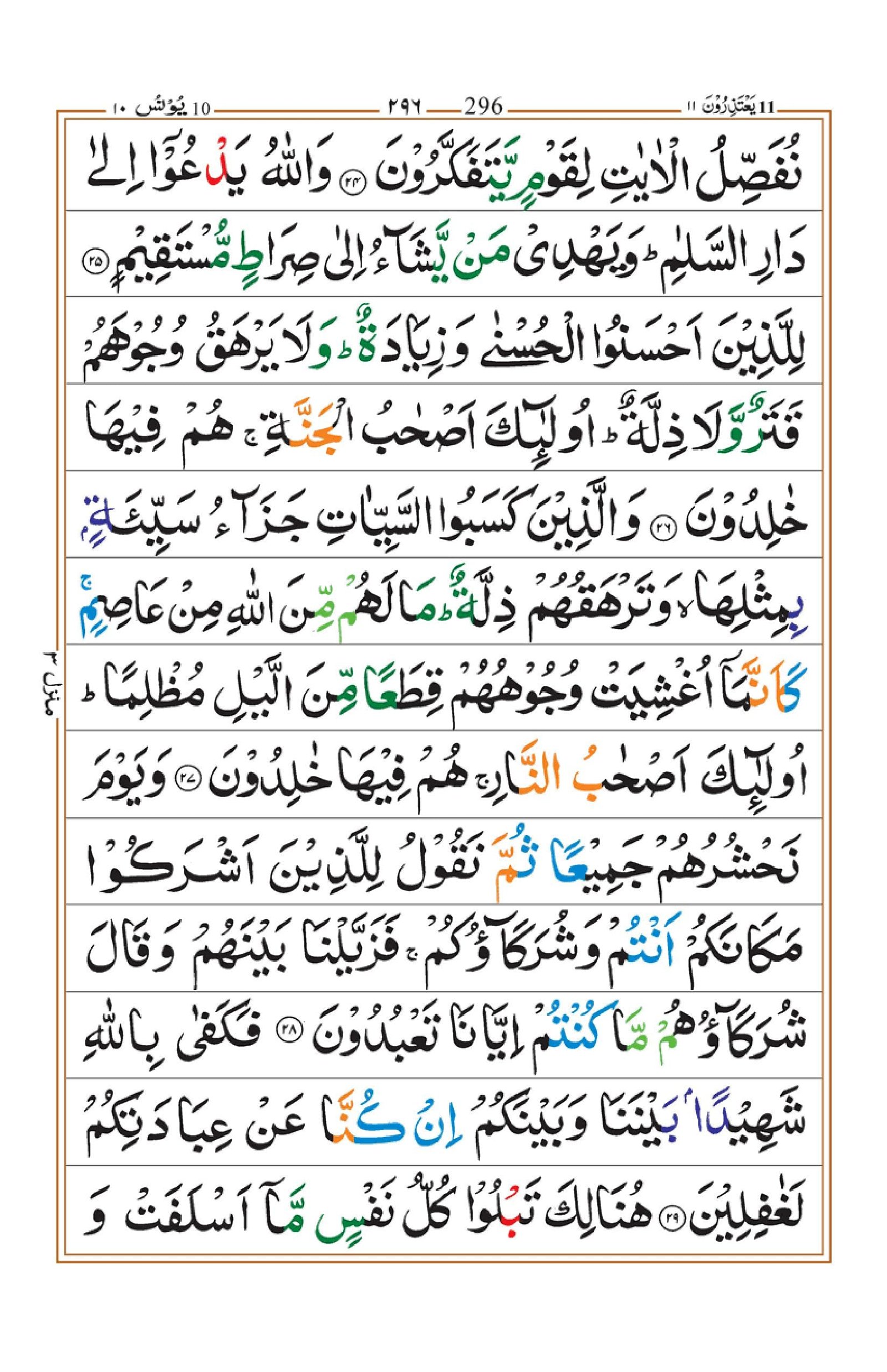

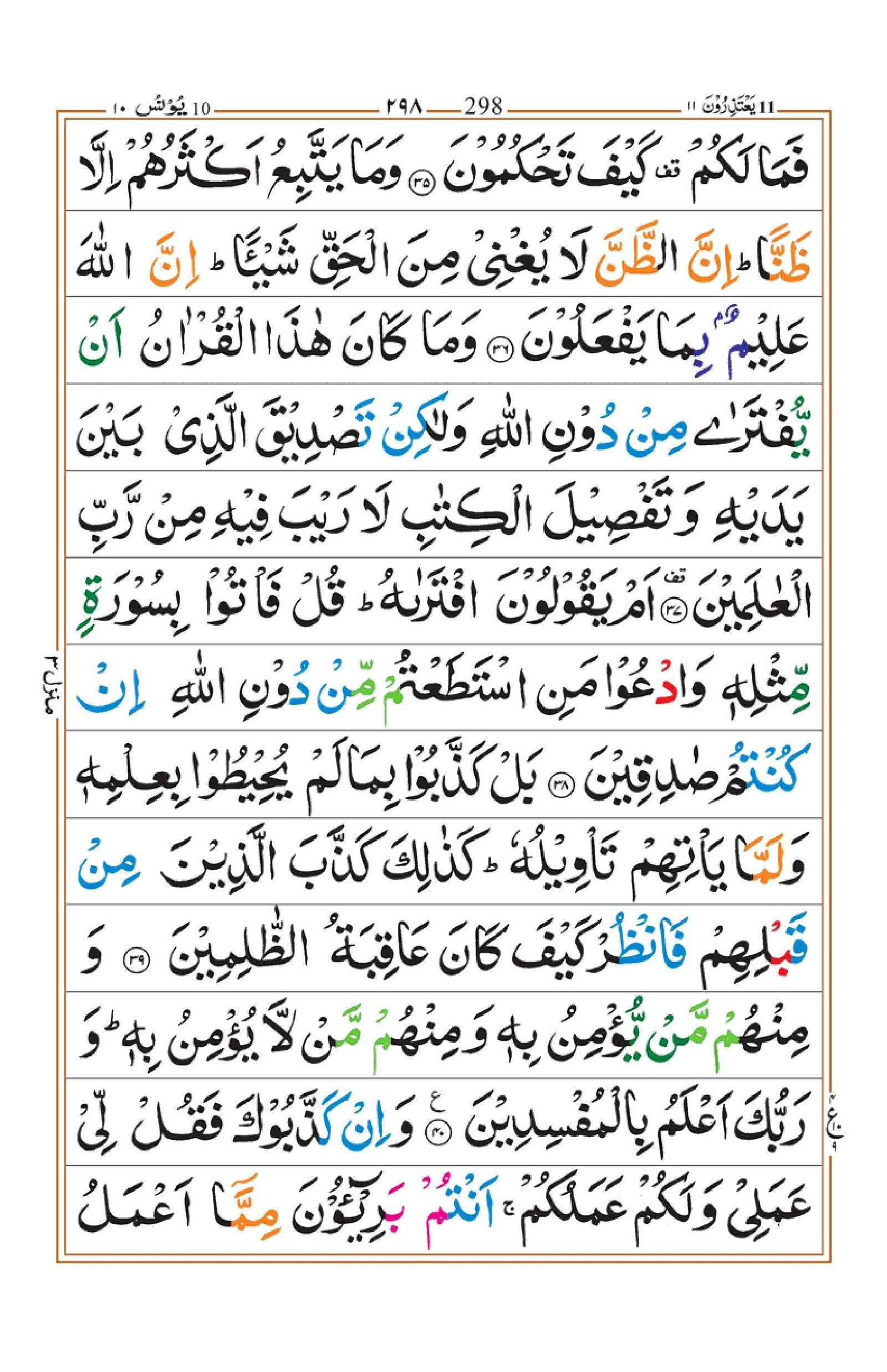
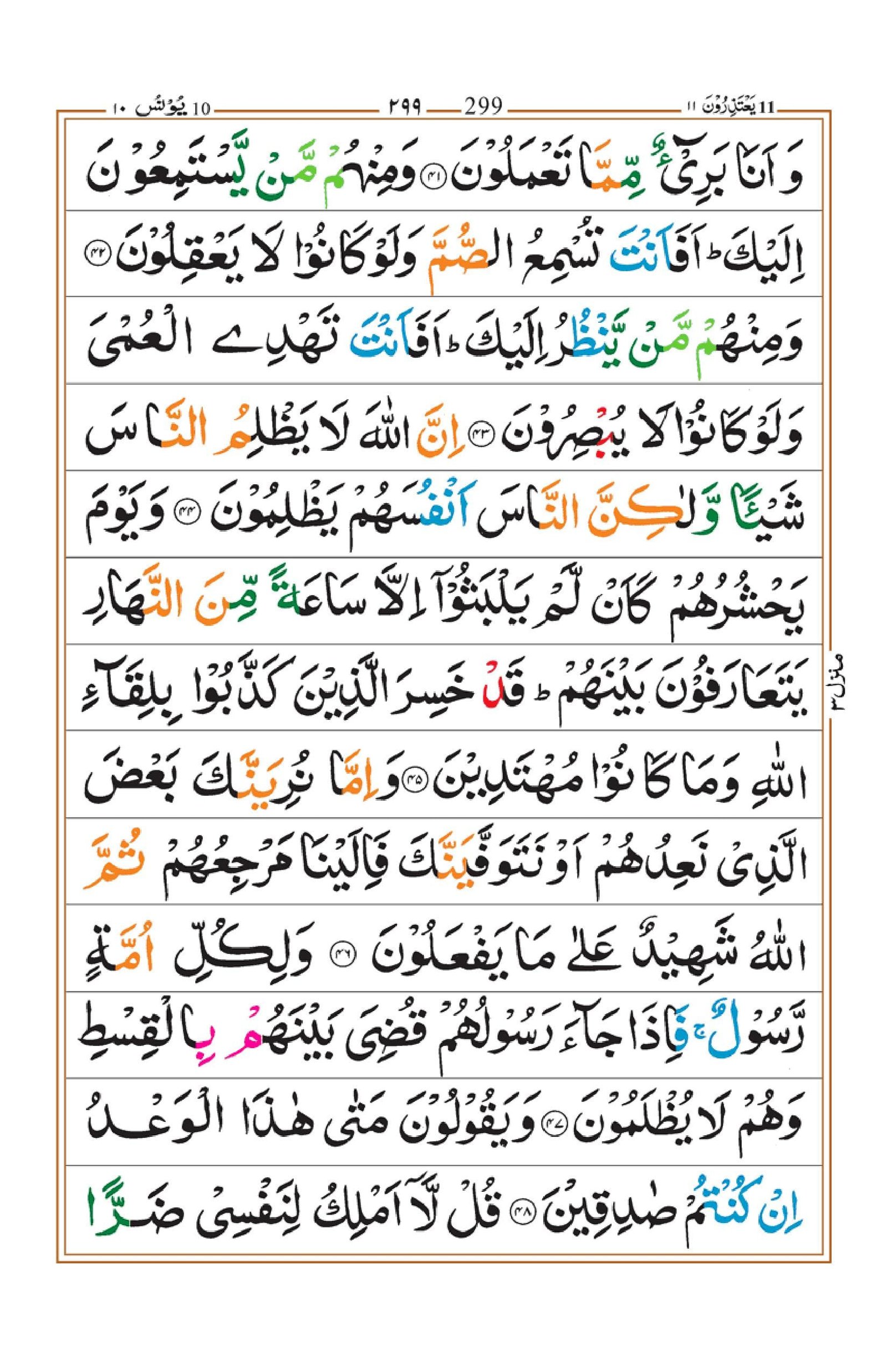
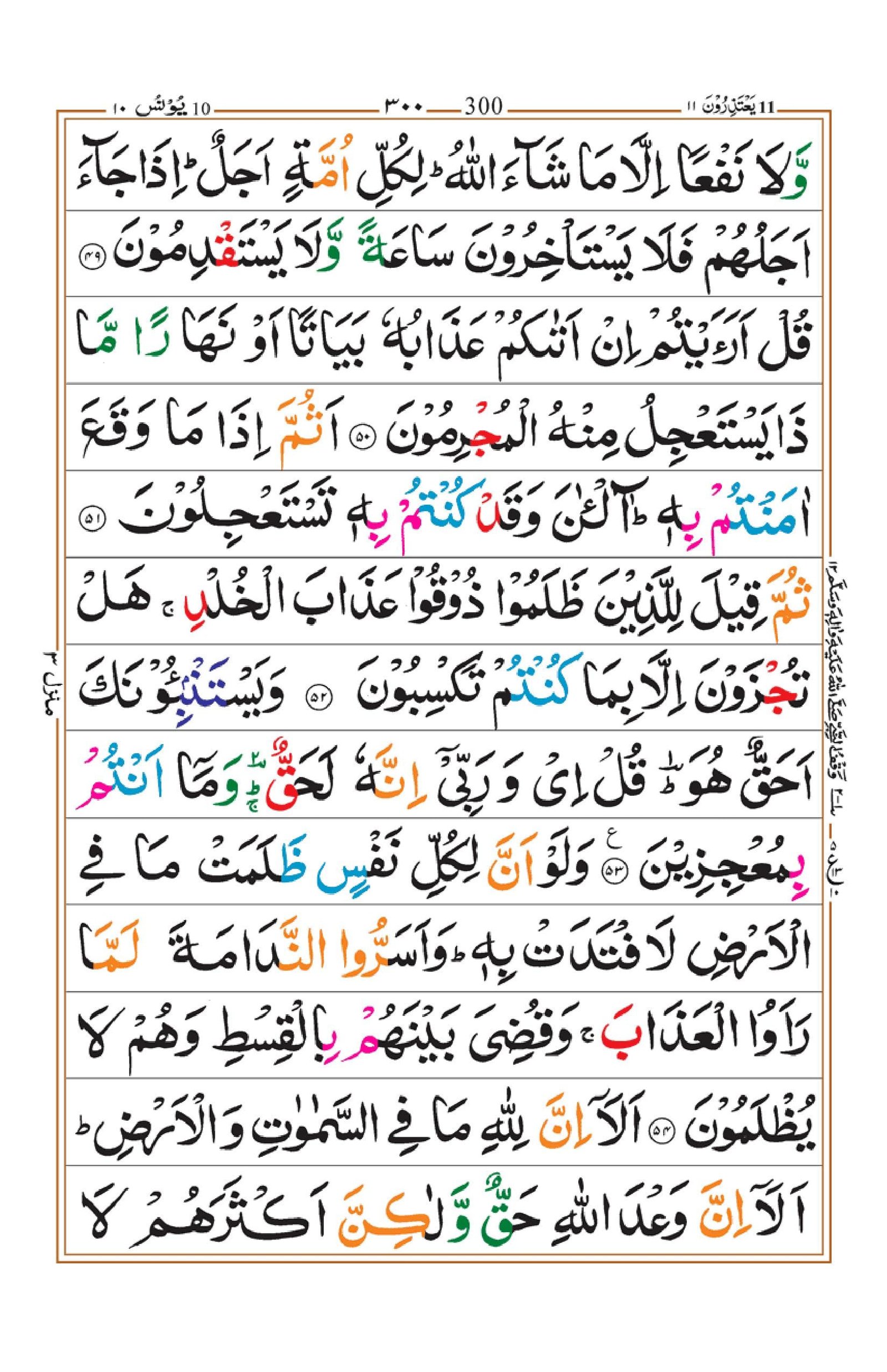
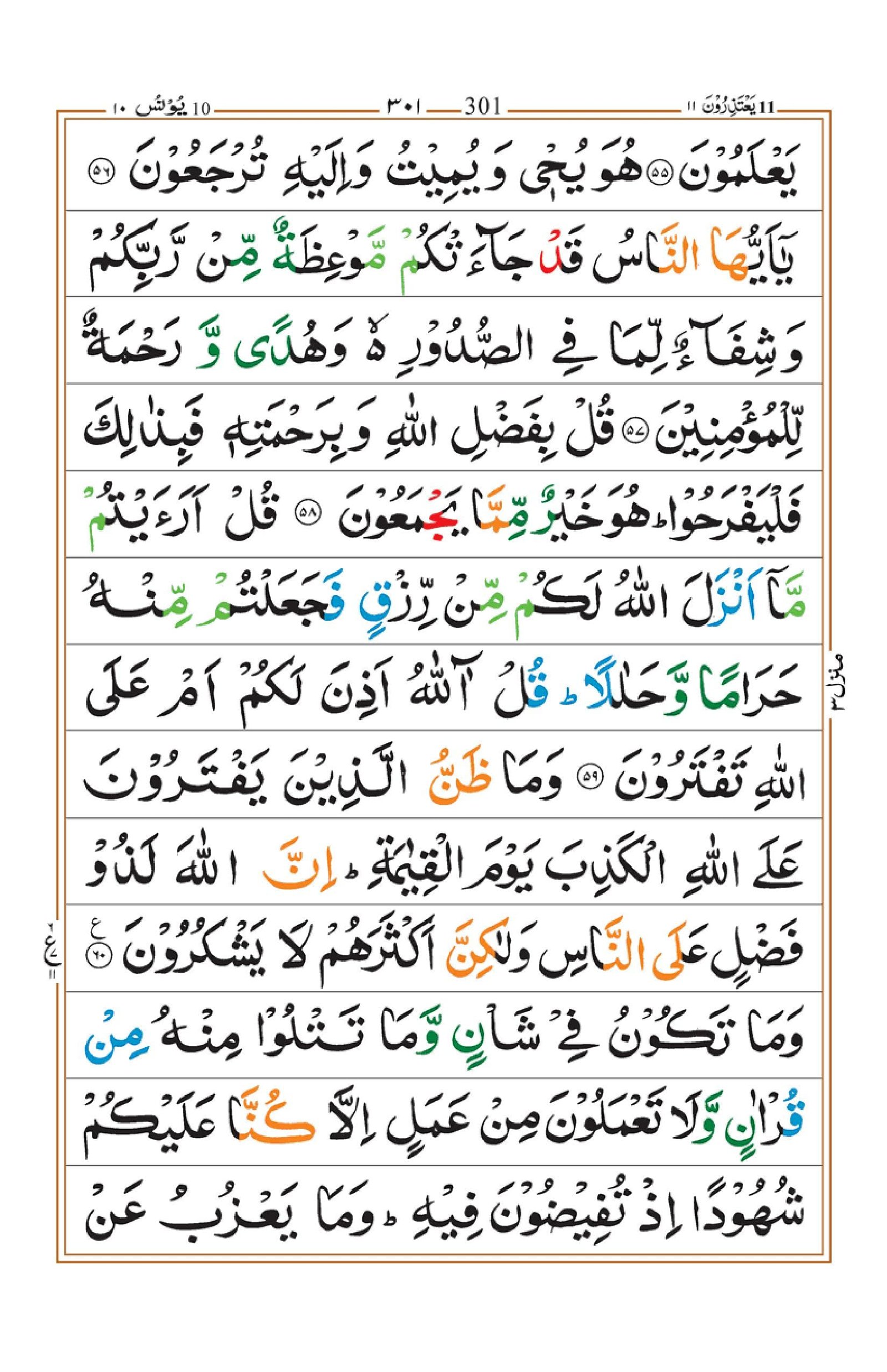

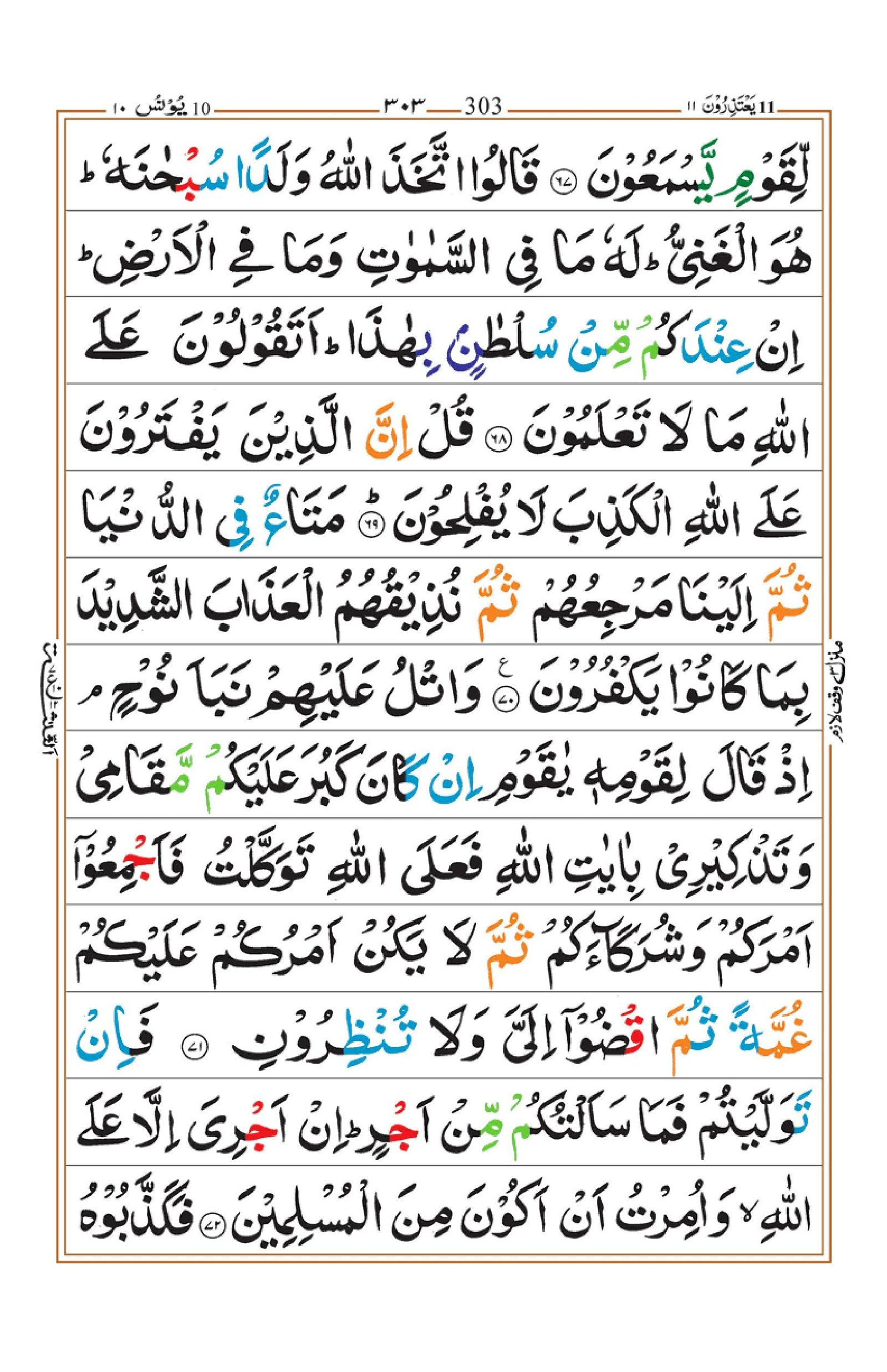

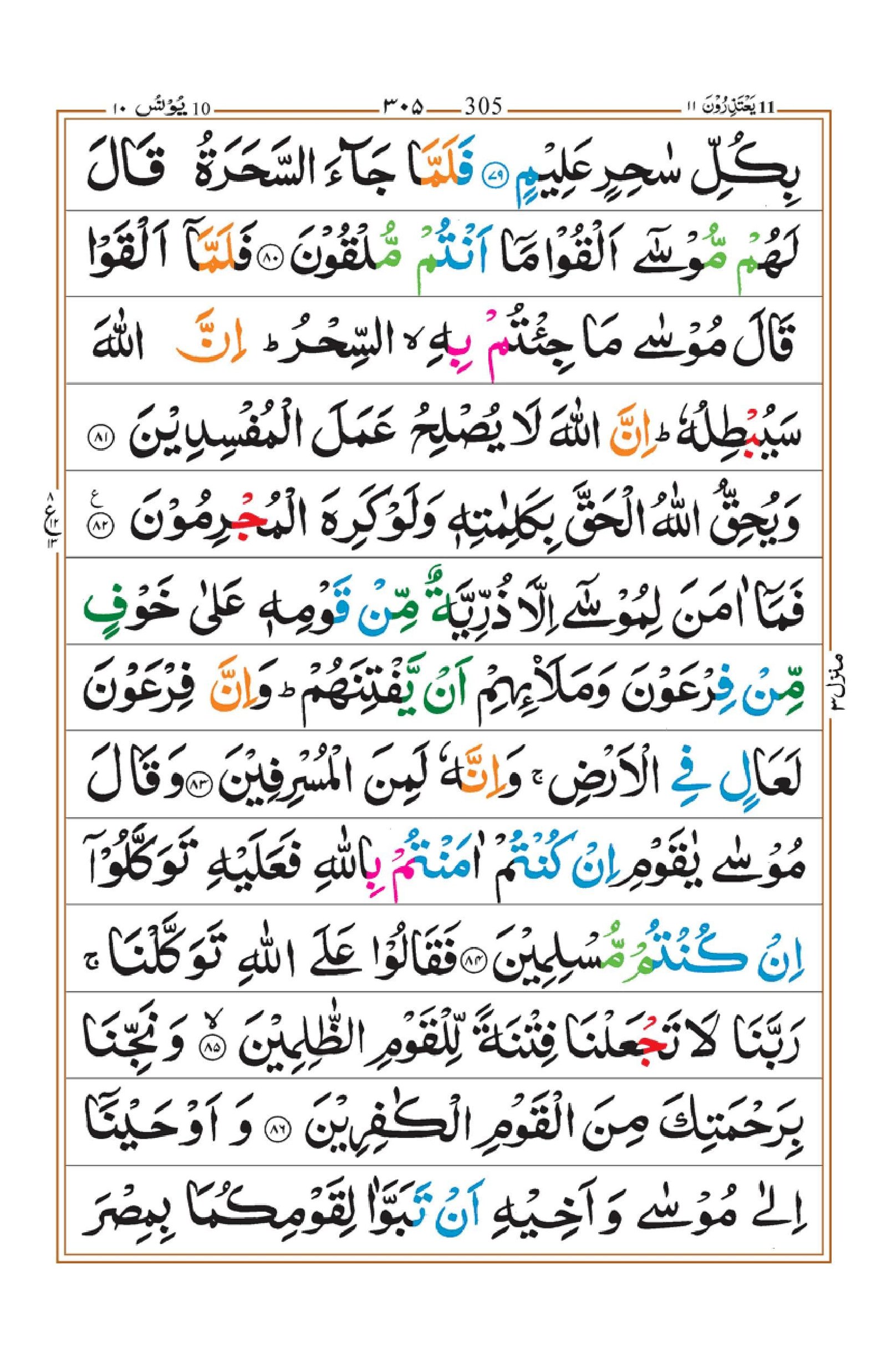


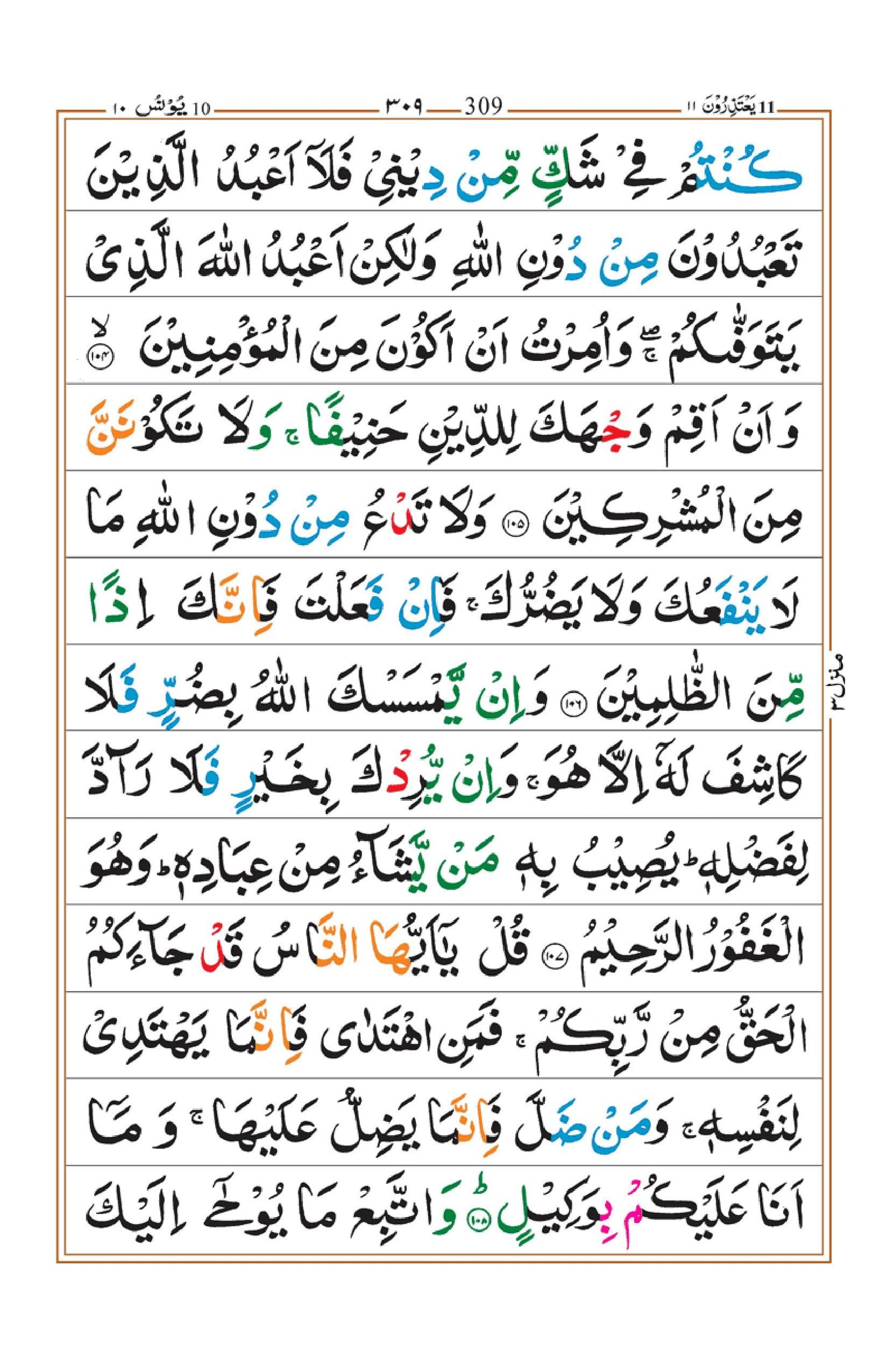

Download Surah Yunus PDF
For convenience, you can download the Surah Yunus PDF, allowing easy access to read, study, and practice the Surah while following the tajweed rules to perfect your recitation.
Conclusion
Surah Yunus is a profound chapter that teaches patience, repentance, and trust in Allah’s mercy. The story of Prophet Yunus and his trials provides valuable lessons for all Muslims. By reciting this Surah and following its tajweed rules, believers can strengthen their faith, overcome difficulties, and seek Allah’s forgiveness and blessings.